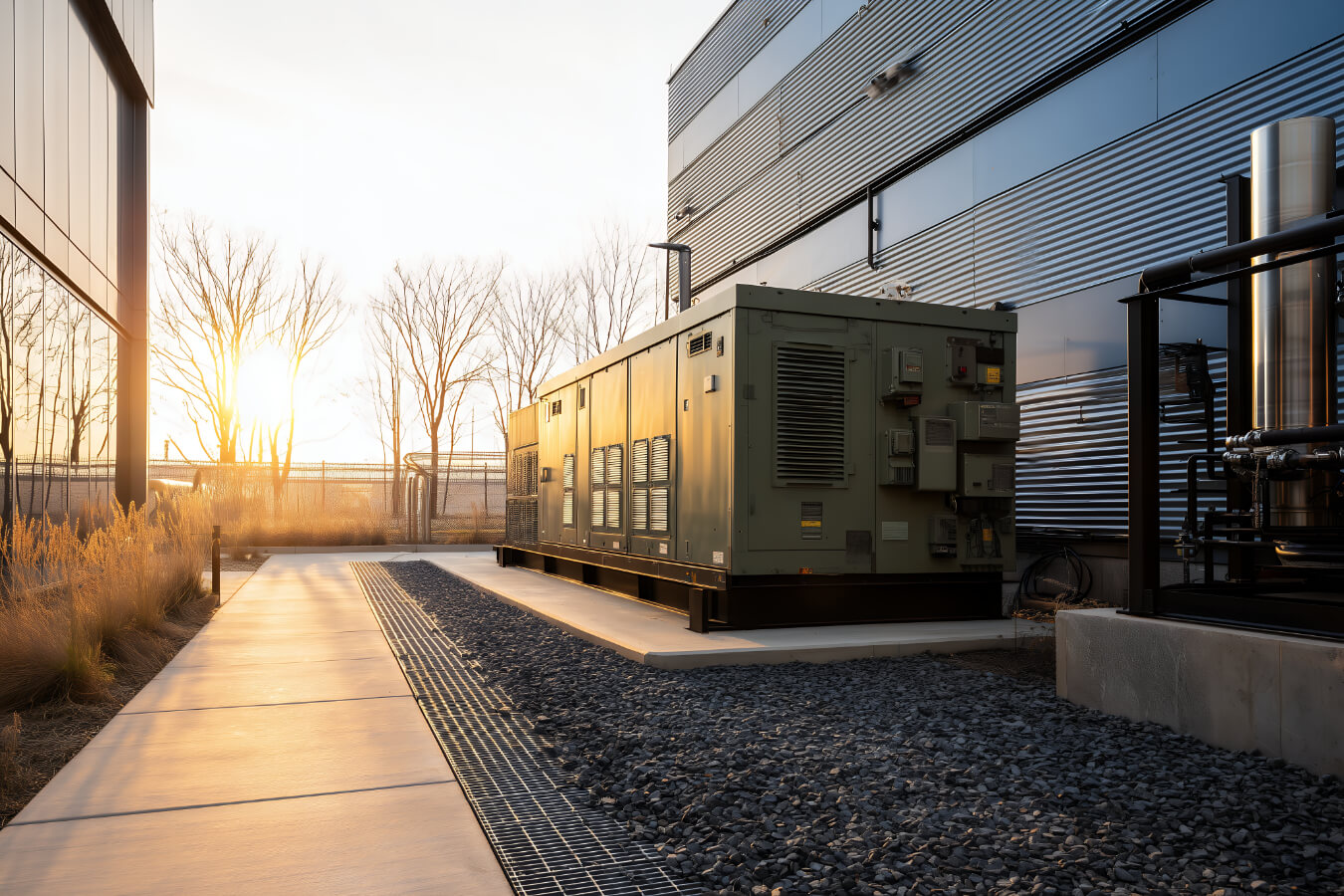
How to Prepare Your Industrial Generator for Hurricane and Storm Season
Businesses prepare their industrial generators for hurricane and storm season by performing proactive inspections, testing the automatic transfer switch (ATS), verifying battery health, evaluating fuel quality, exercising the generator under load, and reviewing emergency response plans before severe weather arrives.
For businesses across Columbia and the Midlands, severe thunderstorms, tropical systems, and hurricane remnants can cause widespread power outages with little warning. When utility power is interrupted, your generator becomes one of the most important assets in your facility. The time to determine whether it's ready isn't during the storm—it's weeks or months beforehand.
At Triple T Critical Power Services, we help commercial, industrial, healthcare, municipal, and critical facilities prepare their backup power systems before severe weather arrives.
A proactive approach helps reduce operational risk, improve reliability, and give facility managers confidence that their systems are ready when they're needed most.
Why Storm Season Matters in South Carolina
South Carolina experiences a wide range of weather events capable of disrupting utility power.
These include:
- Severe thunderstorms
- Lightning
- High winds
- Tropical storms
- Hurricanes
- Flooding
- Falling trees and debris
While many outages last only a few hours, larger storm systems can interrupt power for much longer. During these extended outages, facilities depend on generators to support critical operations, protect equipment, and maintain business continuity.
Storm season is not the time to discover a weak battery, contaminated fuel, or an automatic transfer switch that doesn't operate correctly.
Preparation is what makes the difference.
1. Schedule a Complete Generator Inspection
A professional inspection is one of the most effective ways to identify developing issues before severe weather arrives.
A typical inspection includes evaluating:
- Engine condition
- Cooling system
- Belts and hoses
- Oil and coolant levels
- Fuel system
- Air intake
- Exhaust system
- Electrical connections
- Control panel alarms
Small issues often develop gradually. A coolant leak, loose electrical connection, or worn belt may seem minor during normal operation but can quickly become a major reliability issue during an extended outage.
Routine inspections help identify these problems before they affect generator performance.
For facilities across Columbia and the Midlands, scheduling inspections before storm season helps avoid the rush that often follows major weather forecasts.
2. Verify Battery Health
One of the most common reasons commercial generators fail to start is battery failure.
Even generators that are exercised regularly rely on healthy batteries to initiate startup when utility power is lost.
Unfortunately, batteries naturally deteriorate over time. South Carolina's hot summers accelerate that process. High temperatures increase internal battery degradation, while humidity can contribute to corrosion around battery terminals and electrical connections.
Battery inspections should include:
- Voltage testing
- Charger verification
- Terminal inspection
- Corrosion removal
- Cable condition
- Battery age evaluation
Replacing a battery before storm season is significantly less expensive than discovering it has failed during a power outage.
3. Check Fuel Quality and Fuel Supply
Fuel is another area that often receives less attention than it deserves. Diesel fuel does not remain in perfect condition simply because it sits in a storage tank.
Over time, fuel can develop:
- Water contamination
- Sediment buildup
- Microbial growth
- Oxidation
These contaminants can clog filters, reduce engine performance, and create startup problems precisely when the generator is needed most.
Facilities should also verify that adequate fuel is available for the expected runtime.
Questions worth considering include:
- How long must the facility operate during an outage?
- Are fuel supplier agreements in place?
- Is on-site storage adequate?
- Has the fuel been tested recently?
At Triple T Critical Power Services, fuel quality management is an important part of maintaining long-term generator reliability.
4. Test the Automatic Transfer Switch (ATS)
Many people think about the generator itself while overlooking one of the most important components in the backup power system. The automatic transfer switch.
The ATS constantly monitors utility power. When power is lost, it signals the generator to start and transfers the facility's electrical load to generator power.
If the ATS fails, the generator may start successfully while the building remains without electricity.
Routine ATS testing verifies:
- Proper utility sensing
- Transfer timing
- Mechanical operation
- Electrical integrity
- Return-to-normal functionality
Because the ATS is responsible for connecting backup power to your facility, it should be inspected and tested as part of every proactive maintenance program.
5. Exercise the Generator Under Load
Many generators complete routine exercise cycles every week.
While these exercises are important, they don't always tell the entire story. Simply starting the engine doesn't confirm that the generator can perform under real operating conditions.
Running the generator under load allows technicians to verify:
- Engine performance
- Cooling system operation
- Voltage stability
- Frequency regulation
- Fuel delivery
- Overall system performance
For many facilities, load bank testing provides the most accurate picture of how a generator will perform during an actual outage.
This type of testing helps identify problems that may never appear during no-load exercise cycles, giving facility managers greater confidence heading into storm season.
6. Review Your Emergency Preparedness Plan
Even the most reliable generator is only one part of an effective outage response.
Every facility should have a clear emergency preparedness plan that outlines what happens before, during, and after a power interruption. Storm season is the ideal time to review these procedures and ensure everyone understands their responsibilities.
A strong preparedness plan should include:
- Current emergency contact lists
- Fuel supplier information
- Generator service provider contact information
- Utility company contact information
- Internal communication procedures
- Critical equipment prioritization
- Startup and shutdown procedures
- Recovery procedures once utility power is restored
Facilities should also consider conducting periodic outage drills. Simulating a power outage allows personnel to verify that communication procedures, generator operation, and facility response plans all work together effectively.
When severe weather approaches, preparation should already be complete.
Why Proactive Preparation Matters
Storms are unpredictable. Generator failures don't have to be.
Most commercial generator failures are not caused by the storm itself. They're the result of issues that have been developing long before the weather forecast appeared. Weak batteries. Contaminated fuel. Deferred maintenance. Transfer switch issues. Cooling system problems. These are all conditions that can often be identified and corrected through proactive maintenance and routine testing.
Preparing before storm season provides several advantages:
- Improved generator reliability
- Reduced operational risk
- Greater confidence during outages
- Fewer emergency repairs
- Better protection for critical operations
Waiting until a storm is approaching often limits available service appointments and leaves little time to correct unexpected issues.
Facilities that prepare early place themselves in a much stronger position when severe weather arrives.
Preparing Facilities Across Columbia and the Midlands
South Carolina's weather presents unique challenges for commercial backup power systems. High summer temperatures place additional stress on batteries and cooling systems. Humidity can contribute to corrosion on electrical connections and control components.
Severe thunderstorms and tropical systems increase the likelihood of extended utility outages throughout Columbia and the surrounding Midlands. These local conditions make routine generator inspections and proactive maintenance even more important.
At Triple T Critical Power Services, we work with facilities throughout Columbia and the Midlands to help prepare backup power systems before storm season begins. From generator inspections and Automatic Transfer Switch testing to fuel evaluations and load bank testing, our goal is to help facilities reduce risk and improve confidence in their emergency power systems.
Why Partner with Triple T Critical Power Services?
Preparing for storm season involves much more than checking whether a generator starts.
Our team helps customers evaluate the entire backup power system, including the generator, Automatic Transfer Switch, batteries, fuel system, and supporting equipment.
Triple T provides comprehensive backup power services, including:
- Commercial generator inspections
- Proactive maintenance programs
- Automatic Transfer Switch testing
- Load bank testing
- Fuel system evaluations
- Generator installations and upgrades
- Emergency service
- Long-term system support
Rather than reacting to failures after an outage occurs, we help facilities identify potential issues beforehand so they can move into storm season with greater confidence.
Final Thoughts
Storm season doesn't create backup power problems. It reveals them.
Facilities that invest time in inspections, battery testing, fuel management, ATS testing, generator exercising, and emergency planning are significantly better prepared when utility power is interrupted.
For organizations throughout Columbia and the Midlands, reliable backup power starts long before the first storm warning is issued.
At Triple T Critical Power Services, we're proud to help businesses, healthcare facilities, municipalities, manufacturers, and commercial properties prepare their backup power systems through proactive maintenance and long-term support. Learn more about us here: https://tripletpower.com/industries-we-serve
When the next storm arrives, confidence comes from knowing your system is ready.
Your power. Our mission.
Frequently Asked Questions
How should businesses prepare their generators for hurricane season?
Businesses should schedule generator inspections, test batteries, verify fuel quality, inspect the Automatic Transfer Switch, exercise the generator under load, and review their emergency response plans before storm season begins.
How often should commercial generators be inspected before storm season?
Facilities should follow manufacturer recommendations and their maintenance schedule, but many businesses benefit from a comprehensive inspection before hurricane and severe thunderstorm season each year.
outage.
Why is proactive generator maintenance important before storm season?
Proactive maintenance helps identify developing issues before severe weather arrives, reducing the likelihood of unexpected failures and improving overall backup power reliability during utility outages.
.png)
.png)
.png)