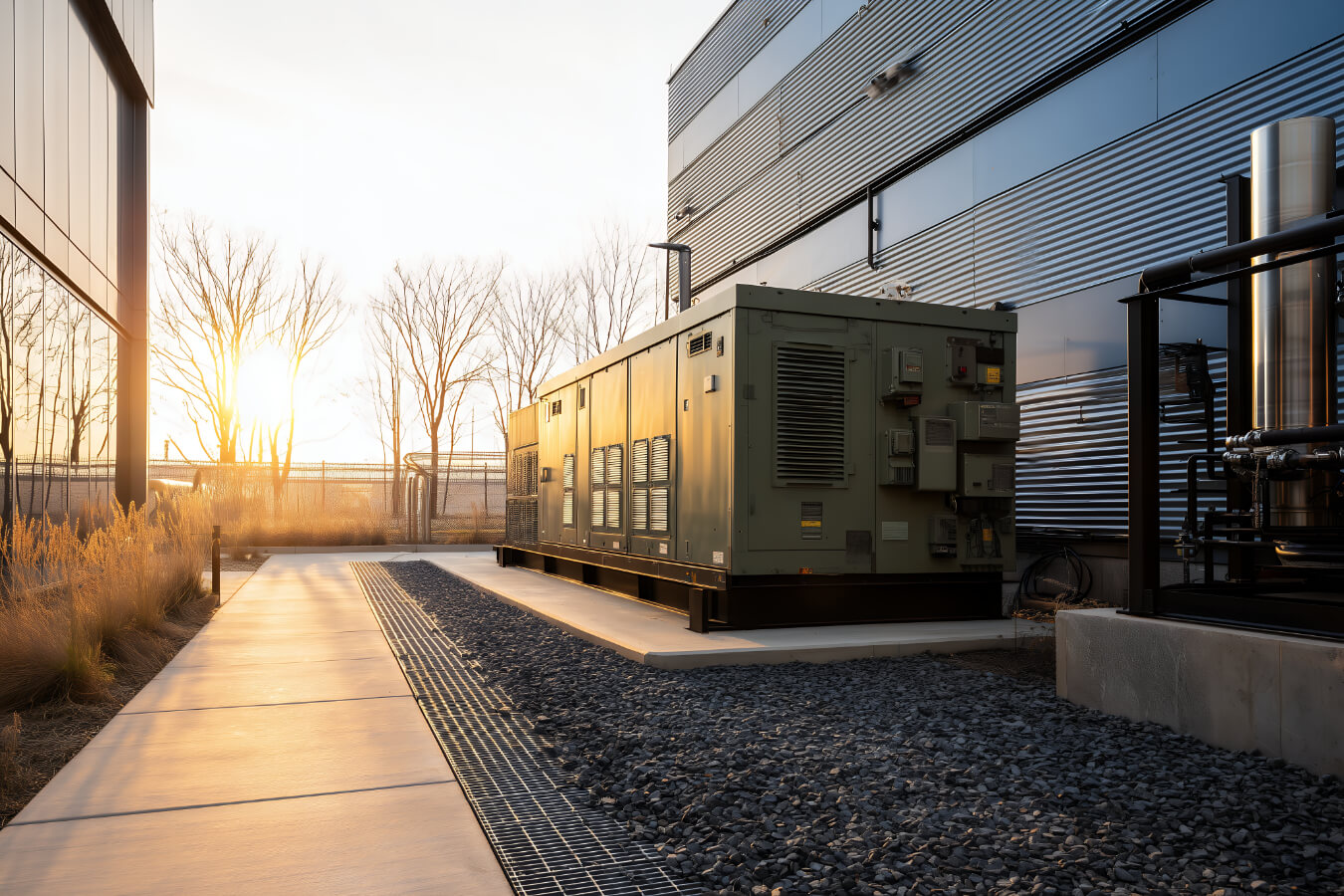
How to Know When It's Time to Replace Your Commercial Generator
When should a commercial generator be replaced?
A commercial generator should be replaced when it can no longer provide reliable backup power, repair costs begin to outweigh replacement costs, replacement parts become difficult to source, or the facility's power demands have outgrown the system. While many commercial generators can operate for decades with proper care, every generator eventually reaches a point where replacement becomes the smarter long-term investment.
For facilities across Columbia and the Midlands, backup power is more than an emergency resource. It protects employees, operations, equipment, inventory, and business continuity during utility power interruptions. A generator that has become unreliable introduces unnecessary operational risk, particularly for manufacturing facilities, healthcare providers, municipal operations, data centers, and commercial buildings, where downtime can have significant consequences.
At Triple T Critical Power Services, we help facilities evaluate their existing generator systems, determine whether repair or replacement is the best path forward, and develop long-term backup power strategies built around reliability. If you're wondering whether it's time to replace your generator, here are the most important factors to consider.
How Long Does a Commercial Generator Last?
One of the most common questions facility managers ask is how long a commercial generator should last.
The answer depends on several factors, including:
- Generator size
- Operating hours
- Maintenance history
- Environmental conditions
- Fuel quality
- Operating application
A standby generator that experiences routine maintenance and operates only during outages and scheduled testing can often provide reliable service for twenty years or more. Conversely, generators used for prime power or those that have experienced inconsistent maintenance may reach the end of their useful life much sooner.
Facilities throughout South Carolina also face environmental challenges that can affect equipment longevity. Summer heat, high humidity, and severe weather place additional stress on batteries, cooling systems, and electrical components. These factors make proactive maintenance essential throughout the generator's life.
Age alone should never determine whether a generator needs to be replaced. Instead, facilities should evaluate overall reliability, operating condition, and the ability of the system to continue supporting critical operations.
Five Signs It May Be Time to Replace Your Commercial Generator
1. Repairs Are Becoming More Frequent
Every generator will require repairs throughout its service life. The question is whether those repairs are becoming more frequent, more expensive, or more disruptive to operations.
If your facility is scheduling multiple service calls each year, replacing major components regularly, or experiencing increasing downtime, it may be time to evaluate replacement.
While individual repairs are often cost-effective, repeated repairs can quickly exceed the value of extending the life of aging equipment.
Common warning signs include:
- Increasing emergency service calls
- Recurring alarm conditions
- Frequent electrical issues
- Rising maintenance costs
- Extended equipment downtime
Rather than continuing to invest in an aging system, facilities often find that replacing the generator provides greater long-term reliability while reducing future maintenance expenses.
2. Replacement Parts Are Becoming Difficult to Find
As commercial generators age, manufacturers eventually discontinue certain components. Control systems, electronic modules, sensors, voltage regulators, and engine parts may become obsolete or increasingly difficult to source.
This creates several challenges:
- Longer repair times
- Increased repair costs
- Limited parts availability
- Extended facility risk during outages
Even if the generator itself remains operational, unavailable replacement parts can turn a relatively simple repair into a lengthy outage.
At Triple T Critical Power Services, one of the factors we evaluate is long-term parts availability. If obtaining critical components has become difficult or unpredictable, replacement may offer greater reliability than continuing to repair older equipment.
3. Your Facility Has Outgrown the Generator
Businesses change over time. Facilities expand. Production increases. New equipment is installed. Electrical demand grows. Unfortunately, many backup power systems remain exactly the same.
A generator that was properly sized ten or fifteen years ago may no longer be capable of supporting your facility during an outage.
Common reasons this occurs include:
- Facility additions
- Increased manufacturing capacity
- New HVAC equipment
- Expanded server rooms
- Additional production equipment
- Increased automation
An undersized generator may struggle during startup conditions or fail to support the facility's current electrical demand.
Rather than repeatedly pushing an older generator beyond its intended capacity, replacing the system with one that reflects your current operational needs provides greater reliability and flexibility for future growth.
At Triple T, generator replacement evaluations always include a new load analysis to ensure the replacement system matches today's requirements rather than yesterday's.
4. Reliability Has Become Unpredictable
Perhaps the most important reason to replace a generator is declining confidence.
Backup power systems exist because facilities cannot afford uncertainty during an outage. If operators are questioning whether the generator will start, transfer properly, or carry the required load, the system has already lost much of its value.
Warning signs include:
- Failed exercise cycles
- Difficulty starting
- Failed load bank testing
- Repeated warning alarms
- ATS communication issues
- Inconsistent performance
One successful startup does not guarantee future reliability. Generators that produce inconsistent results during routine inspections and testing often become larger risks during actual emergencies.
Facilities that depend on continuous operations should place reliability ahead of squeezing additional years out of aging equipment.
5. Major Components Are Reaching the End of Their Service Life
Sometimes the generator itself remains in good condition while major supporting components begin reaching the end of their useful life.
These may include:
- Engine components
- Alternators
- Control systems
- Cooling systems
- Fuel systems
- Automatic Transfer Switches
When several major components require replacement simultaneously, facilities should compare the total investment against the cost of installing a modern generator system.
New equipment often provides:
- Improved reliability
- Better fuel efficiency
- Updated controls
- Enhanced monitoring capabilities
- Greater parts availability
- Longer expected service life
In many situations, replacement becomes the more practical long-term investment.
Repair or Replace?
Every facility eventually reaches a point where this question becomes necessary.
The decision should never be based on age alone.
Instead, consider:
- Maintenance history
- Repair frequency
- Parts availability
- Reliability
- Current facility demands
- Future expansion plans
- Downtime risk
For critical facilities, reliability often outweighs the initial cost savings of continuing repairs. Replacing a generator before it fails also allows facilities to plan the project, budget appropriately, and schedule installation around operational needs instead of responding during an emergency.
Planning for a Generator Replacement
Replacing a commercial generator involves much more than swapping one unit for another. A successful project begins with evaluating how your facility currently operates and what it requires from its backup power system.
This process typically includes:
- Facility evaluation
- Critical load analysis
- Generator sizing
- Fuel selection
- Automatic Transfer Switch compatibility
- Installation planning
- System commissioning
At Triple T Critical Power Services, we help facilities throughout Columbia and the Midlands manage this process from initial evaluation through installation and long-term support. Our goal is not simply to replace equipment but to improve overall system reliability for years to come.
Final Thoughts
Commercial generators are long-term investments, but they are not designed to last forever.
Knowing when to replace a generator can help facilities reduce operational risk, improve reliability, and avoid costly emergency failures.
If your generator requires frequent repairs, struggles to support your facility's current demands, or no longer inspires confidence during testing, it may be time to begin planning for replacement.
At Triple T Critical Power Services, we help businesses throughout Columbia and the Midlands evaluate existing systems, design reliable backup power solutions, and provide proactive maintenance that supports long-term performance.
Reliable backup power starts with making informed decisions before an outage ever occurs.
Your power. Our mission.
Frequently Asked Questions
How long does a commercial generator typically last?
Most standby commercial generators can provide reliable service for 20 years or more when properly maintained. Actual lifespan depends on operating hours, maintenance history, and environmental conditions.
How do I know if my facility has outgrown its generator?
If you've added equipment, expanded operations, or increased electrical demand since the generator was installed, a new load analysis can determine whether the existing system is still properly sized.
Can I replace my generator without replacing the Automatic Transfer Switch?
In many cases, yes. However, the ATS should be evaluated for compatibility, condition, and remaining service life before a new generator is installed.
Who should evaluate whether my commercial generator needs to be replaced?
An experienced critical power provider can assess your generator's condition, maintenance history, operational requirements, and future needs to determine whether continued repairs or replacement is the best long-term solution.
-1.png)
.png)