Why Backup Power Knowledge Matters: Understanding Your EPSS Before the Power Goes Out
For many facilities, backup power is treated like insurance. Everyone is glad it is there, but no one wants to think about it until something goes wrong. That approach creates risk. A backup generator is one of the most important pieces of infrastructure a facility owns, yet the generator itself is only part of the story. Reliable emergency power depends on a complete system of equipment, controls, switches, wiring, fuel, maintenance, testing, documentation, and operational planning.
That complete system is known as the Emergency Power Supply System, or EPSS.
For facility managers, operations leaders, property owners, healthcare administrators, manufacturers, schools, municipalities, and commercial building teams across Columbia, Sumter, and the Midlands, understanding your EPSS is not just a technical matter. It is a business continuity, safety, compliance, and leadership issue. When the utility fails, your facility does not need a generator that looks good on paper. It needs a reliable backup power system.
Backup Power Is More Than a Generator
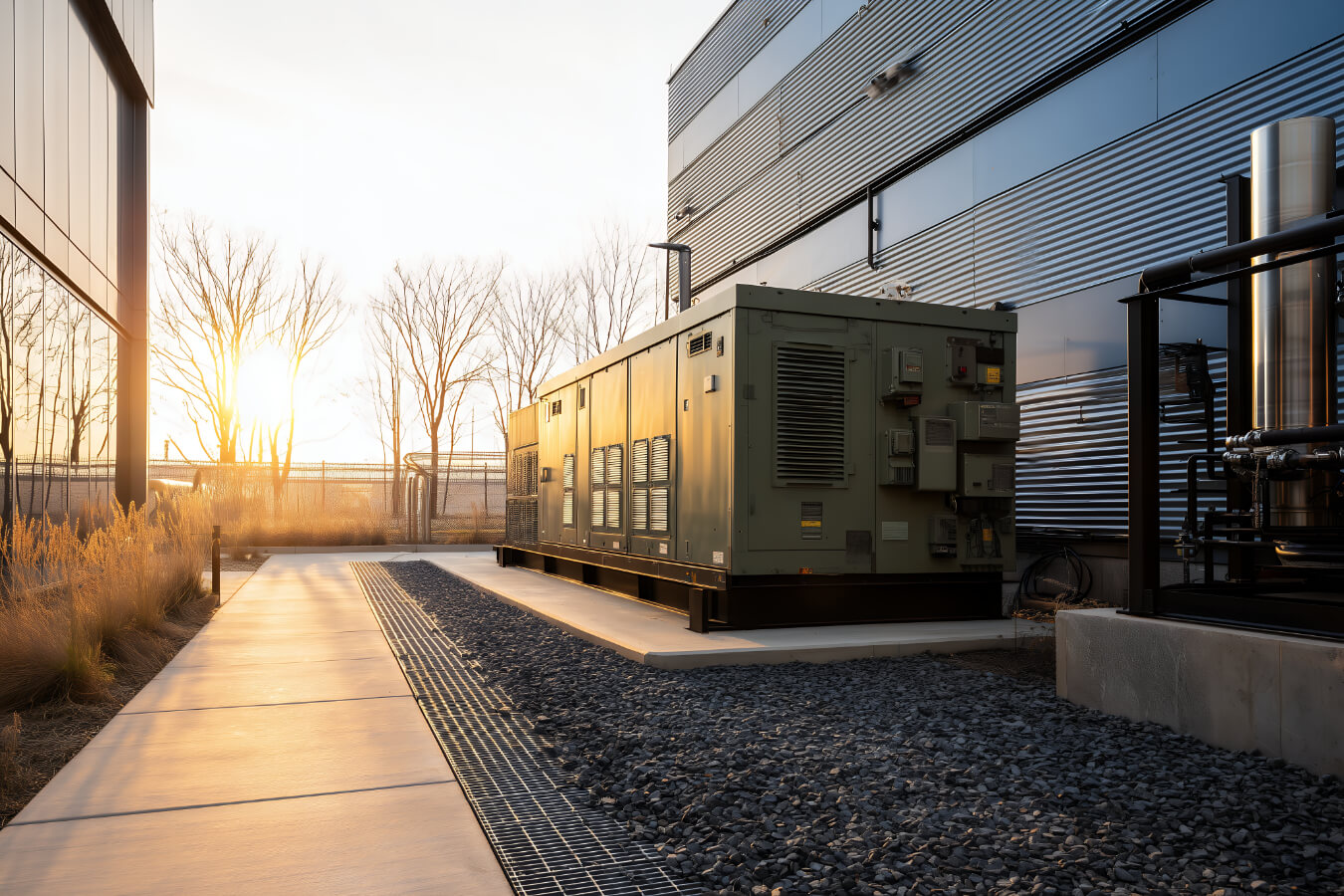
Most people use the word “generator” to describe their backup power system. That is understandable. The generator is the most visible piece of equipment. It is usually outside the building, large, and the part most people associate with emergency power. But a generator alone does not protect a facility. The generator produces power. The EPSS ensures that power reaches the right equipment at the right time. A complete EPSS may include the generator set, engine, alternator, fuel system, starting batteries, battery charger, cooling system, exhaust system, automatic transfer switch, switchgear, distribution panels, breakers, feeders, controls, remote annunciator, monitoring devices, and connected emergency loads. If one part of that system fails, the entire backup power plan can fail.
A generator may start and run properly, but if the automatic transfer switch fails to transfer the load, the building can still lose power. A transfer switch may function, but if the generator cannot handle the building's actual load, critical systems may go offline. A generator may be properly sized, but if the fuel is contaminated or the batteries are weak, the unit may not start when needed. A system may have worked years ago, but if the facility has expanded or added equipment, the emergency power system may no longer meet the building's operational needs. This is why knowledge of backup power matters. It is not enough to know that you have a generator. You need to know what that generator supports, how it is connected, maintained, and tested, and what happens during a real outage.
What Is an EPSS?
An Emergency Power Supply System (EPSS) is the complete system that provides an alternate source of electrical power when normal utility power is interrupted.
The EPSS begins with the Emergency Power Supply (EPS), which is the power source, most often a generator set. The EPSS includes the EPS and all connected equipment needed to transfer and distribute emergency power to designated loads.
In practical terms, the EPSS answers these questions:
- What starts when utility power fails?
- What equipment receives backup power?
- How quickly does emergency power come online?
- How long can the system operate?
- What systems are protected?
- What systems are not protected?
- How is the system tested?
- Who is responsible for maintaining it?
- Where is the documentation?
- What happens if one part of the system fails?
These questions should not be left unanswered until an outage occurs. Facility leaders need to understand the system in advance, because emergency conditions are the worst time to discover gaps.
Why Facility Managers Need to Understand Their Backup Power System
Facility and operations managers do not need to be generator technicians. They do not need to perform the service work themselves. But they do need to understand the system well enough to manage risk, ask the right questions, and make informed decisions. Backup power affects almost every part of a facility.
In a healthcare environment, emergency power may support life-safety systems, medical equipment, nurse call systems, lighting, HVAC, elevators, refrigeration, fire protection, and communications. In a manufacturing facility, backup power may protect production equipment, compressed air, controls, pumps, IT systems, security, and process continuity. In a commercial building, emergency power may support fire alarm systems, emergency lighting, access control, elevators, tenant systems, and critical infrastructure. In municipal facilities, backup power may support public safety, water and wastewater operations, emergency response, and communications. Every facility is different. That is why assumptions are dangerous.
A facility manager may assume that all critical systems are backed up. An operations leader may assume that the generator can run the entire building. A tenant may assume that the building’s emergency power includes their IT room. A production manager may assume that a key process can continue during an outage. A healthcare team may assume that required circuits are covered. Those assumptions need to be verified.
Understanding your EPSS enables your team to plan realistically. It helps you identify what is protected, what is vulnerable, and what needs to be addressed before a power failure creates a larger problem.
NFPA 110 and the Importance of Standards
NFPA 110, Standard for Emergency and Standby Power Systems, is a key standard for emergency and standby power systems. NFPA describes the standard as covering the performance requirements for emergency and standby power systems that provide an alternate source of electrical power in buildings and facilities. NFPA also notes that the standard is commonly referenced and contains performance requirements for emergency power supply systems, most commonly generators.
For facility leaders, NFPA 110 is important because it provides a framework for how emergency power systems are classified, installed, maintained, and tested. NFPA 110 uses classifications that help define the performance expectations of an EPSS. These include the system's level, class, and type.
The level generally relates to the consequences of system failure. A Level 1 system is associated with applications where failure could create a serious threat to life safety. A Level 2 system is associated with applications where failure is less likely to directly threaten human life but could still create serious disruption, hazards, or property loss. The class relates to the minimum time the system is designed to operate at its rated load without refueling or external support. The type relates to how quickly the system must provide power after normal power is lost.
These classifications matter because not every emergency power system serves the same purpose. A hospital, a manufacturing facility, a commercial office, a municipal building, and a warehouse may all have backup power, but the risk profile and operating requirements can be very different. Facility managers should know how their EPSS is classified and what that classification means for testing, maintenance, documentation, and operational planning.
The Components That Matter
A reliable EPSS depends on the performance of multiple components. The generator set is the starting point. It must be properly sized, maintained, and tested. The engine, alternator, fuel system, batteries, controls, cooling system, exhaust, belts, hoses, fluids, filters, block heater, and safety devices all require attention. The automatic transfer switch is equally important. The ATS detects a loss of normal power, signals the generator to start, and transfers the designated load to emergency power once the generator is ready. If the ATS fails, the generator may be running, but the facility may not receive emergency power.
The fuel system is another critical area. Diesel fuel can degrade over time. Water, sediment, microbial growth, and contamination can all affect generator performance. A facility that does not monitor fuel quality may have a generator that is technically maintained yet still vulnerable during an extended outage. The batteries and charger also deserve attention. Weak or poorly maintained batteries are a common cause of generator start failures. A generator that cannot start is not a backup power system. It is an expensive piece of equipment sitting idle at the exact moment it is needed.
Distribution equipment matters as well. Breakers, panels, feeders, switchgear, and connected loads determine where emergency power goes. If drawings are outdated or circuits have been modified over time, facility teams may not have a clear picture of what is connected. Monitoring and alarms help teams respond quickly. Remote annunciators, local alarms, control panels, and monitoring systems provide visibility into system status. But alarms only help if someone knows what they mean and who is responsible for responding.
A strong EPSS program looks at the entire system, not just the generator.
Testing Reveals What Assumptions Hide
Testing is one of the most important aspects of backup power reliability. A generator exercise can confirm that the unit starts and runs. But a short exercise does not always prove that the system can perform during a real outage. Load bank testing can confirm that the generator can operate under load and reveal issues that may not appear during light-load operation. Transfer switch testing can confirm whether the facility can transfer from utility power to emergency power. Fuel testing can identify contamination before it causes a failure. Battery testing can help prevent start failures. Infrared inspections and electrical maintenance can reveal overheating, loose connections, and other concerns.
The Joint Commission’s emergency generator testing guidance references NFPA 110 requirements, including annual load testing and triennial exercise expectations for healthcare facilities. Even for facilities outside healthcare, the broader lesson applies: emergency power systems should be tested in ways that reflect real operating needs, not just checked for appearance.
Testing also creates documentation. That documentation helps facility teams understand system history, track recurring problems, demonstrate compliance, support capital planning, and hold service providers accountable. A test that is not documented is a missed opportunity. A documented deficiency that is not corrected is an open risk.
Documentation Is Part of Reliability
Backup power knowledge should not be confined to one person’s head. Facilities, staff, vendors, and equipment change. If system knowledge is not documented, the facility becomes vulnerable. A good EPSS documentation package should include current one-line diagrams, equipment lists, generator data, transfer switch information, connected load information, maintenance records, test records, fuel test results, load bank reports, deficiency logs, repair history, inspection reports, emergency operating procedures, and service provider contacts.
This information should be easy to access, reviewed regularly, and updated whenever the facility changes. Documentation is especially important for facilities that have expanded or changed use over time. A building may have added new equipment, tenants, production lines, IT systems, or HVAC loads. If emergency power coverage was not reviewed during those changes, the EPSS may no longer align with the facility’s current needs. The system may still start and pass a basic test, but it may not support what the facility now depends on.
The Cost of Not Knowing
The cost of poor backup power knowledge can be significant. For a manufacturer, it can mean lost production, damaged equipment, missed shipments, overtime costs, safety risks, and customer disruption. For a healthcare or senior care facility, it can affect patient care, resident safety, temperature control, refrigeration, lighting, and compliance. For a commercial property, it can affect tenant satisfaction, access control, security, elevators, fire protection, and reputation. For a municipal facility, it can affect public services and community trust. The risk is not always a total system failure. Sometimes the risk is a partial failure that exposes a hidden gap.
- The generator runs, but not long enough.
- The generator starts, but the ATS does not transfer.
- The system transfers, but a critical panel is not connected.
- The load is connected, but the generator is overloaded.
- The generator has fuel, but the fuel is contaminated.
- The system was designed correctly, but facility changes made the design outdated.
- The maintenance was performed, but deficiencies were never resolved.
These are the kinds of issues that can be identified before an outage if facility teams take a more active role in understanding their EPSS.
Research and Real-World Lessons Support the Need for Better Emergency Power Planning
Emergency power reliability is not just a service provider concern. It is a recognized resilience issue across healthcare, emergency management, infrastructure, and facility operations.
ASPR TRACIE, a healthcare emergency preparedness resource from the U.S. Department of Health and Human Services, includes utility failure resources that focus on lessons learned and emergency power vulnerability assessment. FEMA has also published guidance related to healthcare facilities and power outages, emphasizing the role of backup power in resilience planning.
A 2026 report from the U.S. Department of Health and Human Services Office of Inspector General found emergency power system deficiencies in 72 of 100 sampled nursing homes, with issues tied to maintenance gaps, circuit coverage, and system reliability. While that report focused on nursing homes, the message applies to many facility types: having emergency power equipment does not automatically mean the facility is prepared.
The most reliable facilities are not the ones that simply own backup power equipment. They are the ones who understand it, test it, maintain it, document it, and plan around it.
What Facility Leaders Should Ask
A facility manager or operations leader should be able to answer the following questions:
- What generator do we have, and what is its capacity?
- What fuel does it use?
- How long can it run under the expected load?
- Which systems are connected to emergency power?
- Which systems are not connected?
- How many transfer switches do we have?
- Which loads does each transfer switch serve?
- When was the last preventive maintenance performed?
- When was the last load bank test performed?
- When was the last fuel test performed?
- Are there any open deficiencies?
- Do we have up-to-date one-line diagrams?
- Has the facility changed since the system was installed?
- Do we have a plan for extended outages?
- Do we have access to rental power if needed?
- Who responds during an emergency?
- How quickly can our service provider respond?
If these questions are difficult to answer, that is a sign the facility needs an EPSS review.
How Triple T Critical Power Services Can Help
Triple T Critical Power Services supports facilities across Columbia, Sumter, and the Midlands with generator maintenance, emergency repair, load bank testing, fuel testing, transfer switch service, rentals, electrical services, and critical power support. Our role is not just to service equipment. It is to help customers better understand the systems they rely on. That means looking beyond the generator. It means helping facility teams identify equipment, understand connected loads, review maintenance history, evaluate testing needs, document deficiencies, and develop a practical plan to improve reliability.
For some facilities, the next step may be routine preventive maintenance. For others, it may be ATS service, load bank testing, fuel testing, documentation updates, system troubleshooting, rental planning, or a broader EPSS assessment. The goal is simple: help customers avoid preventable failures.
Final Thought
Backup power knowledge matters because emergency power is only valuable if it works when needed. A generator is important. But the EPSS is the full system that protects your facility. It includes the generator, transfer switch, fuel system, batteries, controls, distribution equipment, connected loads, maintenance records, testing program, documentation, and emergency plan.
Facility leaders do not need to know every technical detail, but they do need to understand enough to manage the risk.
- What does the system support?
- How is it tested?
- How is it maintained?
- What are the known weaknesses?
- What happens during an extended outage?
- Who is responsible when the power fails?
.png)
.png)